Stone Information
Stone Maintenance
Show | Hide
Stone Maintenance
Show | HideMaintaining Your Stones
Proper maintenance begins with a clear understanding of the specific stone installed. As a natural material, stone is inherently sensitive to certain cleaning agents and care methods. Most natural stones are alkaline in composition, similar to soil and mineral deposits, which makes them susceptible to harm from aggressive or abrasive products.
To preserve the integrity, appearance, and longevity of your stone surfaces, we recommend consulting your installer for application-specific guidance.
For comprehensive care recommendations, please refer to the
Natural Stone Institute: Care & leaning resource.
Installation Guidance
For optimal results, installation should be performed in collaboration with a qualified professional experienced in natural stone applications. All installations should follow best practices outlined in the TCNA Handbook for proper Stone Installation.
LIMESTONES, particularly in wet environments, may require rapid-set thinset to ensure proper adhesion and long-term durability.
MOTHER OF PEARL is best suited for low-traffic, low-temperature areas and is not recommended for shower floors or high-traffic installations. Bathroom floors are generally acceptable. Installation should be completed using unsanded grout to protect the surface.
For grout selection and installation procedures, please refer to
Laticrete Installation Guidelines
Precautions
The Original Nature of Stone
Show | Hide
The Original Nature of Stone
Show | Hide
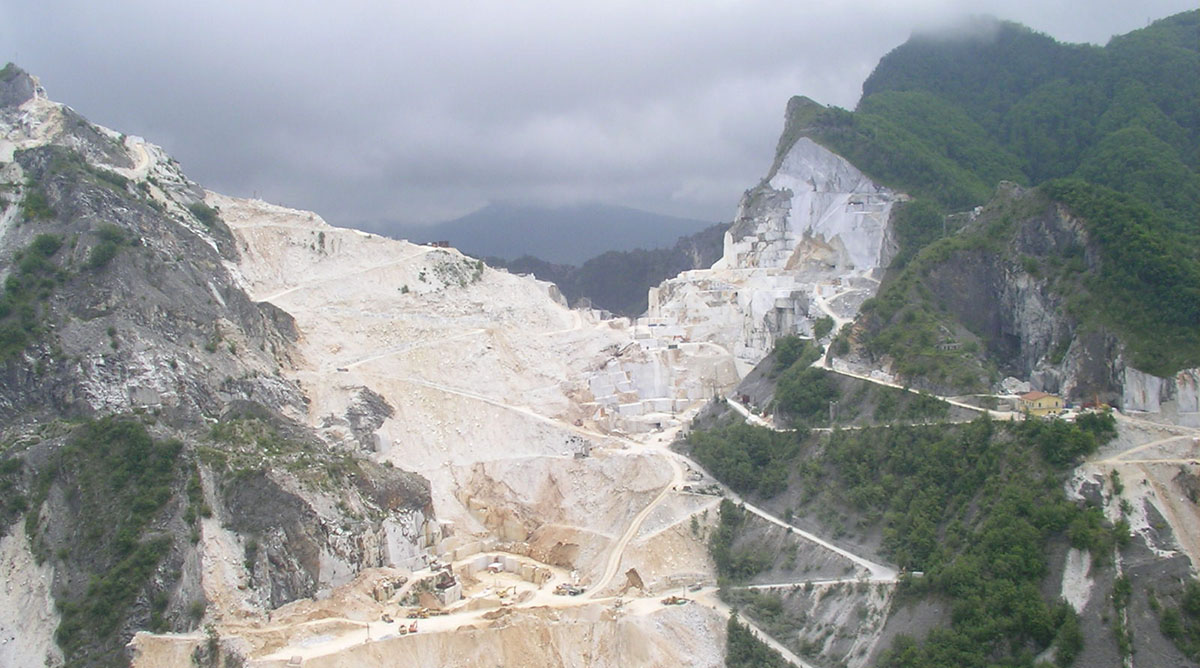
Where Do Stones Come From?
Stones are natural solids, composed of one or more minerals, formed over millions of years; intense heat, pressure, and the accumulation of organic matter deep below the Earth’s surface give rise to a remarkable variety of stones, each with unique characteristics; as the planet’s surface shifts, erodes, and evolves, vast rock formations are exposed, many of which have become renowned quarry sites around the world; key sources of premium natural stone include Brazil, Canada, China, France, Greece, India, Italy, Mexico, the Middle East, Portugal, Spain, Taiwan, Turkey, and the United States, among others.
Stone Formation Types
Show | Hide
Stone Formation Types
Show | HideHow Are Stones Formed?
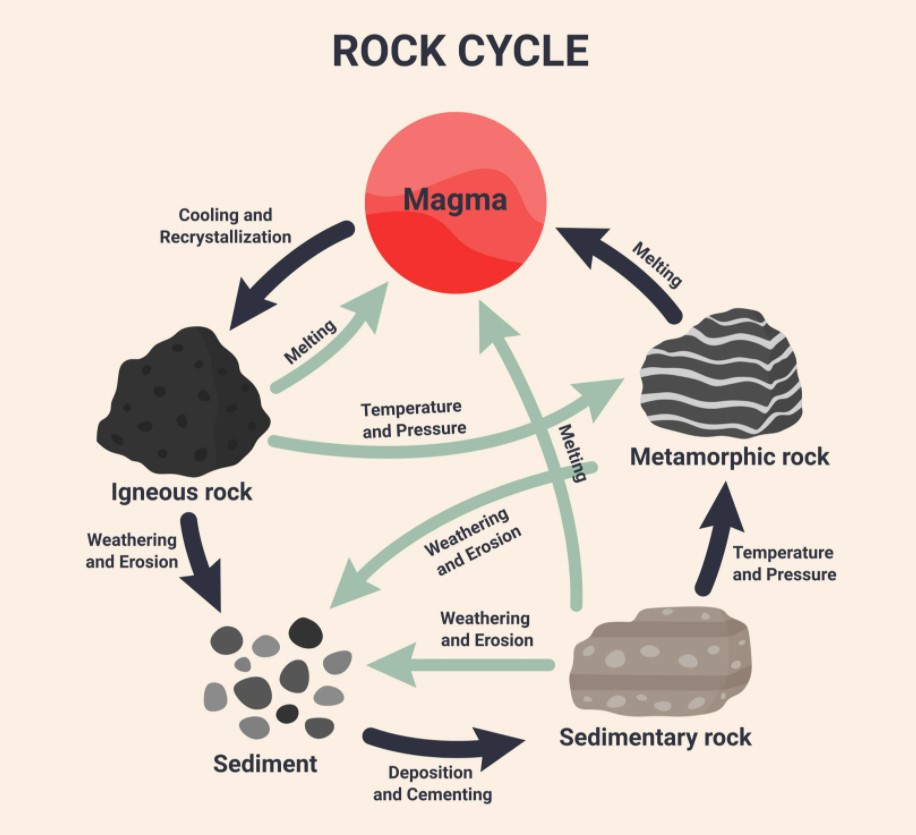
Natural stone is categorized into three primary groups based on how it is formed: igneous, sedimentary, and metamorphic.IGNEOUS: Granite, Basalt, Obsidian
Igneous stones are formed from molten lava or magma that has cooled and solidified. These stones are generally very hard and dense, making them highly durable and resistant to heat and scratching.
SEDEMENTARY: Limestone, Sandstone, Travertine, Conglomerate
Sedimentary stones are formed through the accumulation of mineral and organic particles that are eroded, transported, deposited, and compacted over time. Due to their layered structure and higher porosity, these stones are typically softer and may require sealing to enhance durability.
METAMORPHIC: Marble, Quartzite, Slate, Soapstone
Metamorphic stones originate from existing rocks that have been transformed by intense heat, pressure, or chemical processes without melting. These conditions alter the stone’s structure and appearance, resulting in materials that may be dense or layered and, in some cases, more sensitive to acids.
Photo Credit: www.pressbooks.senecapolytechnic.ca
Natural Stone Types & Characteristics
Show | Hide
Natural Stone Types & Characteristics
Show | Hide
Limestone
Limestone is a sedimentary rock mainly composed of calcium carbonate (calcite), formed from compacted marine organisms like shells and bones, and/or from calcite precipitation in water; its texture ranges from fine to coarse-grained, sometimes with visible fossils; depending on composition, it can be relatively soft and prone to scratches and stains.

Granite
Granite is an igneous rock composed primarily of quartz, feldspar, and minor amounts of mica; it typically has a crystalline granular appearance and ranges widely in color from light to dark tones; granite is very hard and durable; while relatively low in porosity compared to many natural stones, it can still absorb liquids and may stain if not properly sealed.

Marble
Marble is a metamorphic rock formed when limestone is subjected to intense heat and pressure; it is composed primarily of calcite or dolomite and is characterized by crystalline structures, distinctive veining, and visible grain; marble’s wide range of colors and natural variation make it a popular material for decorative and architectural applications.

Mother of Pearl
Mother of Pearl, also known as nacre, is a natural material formed as the iridescent inner layer of mollusk shells; it is prized for its luminous, pearlescent appearance and refined elegance; while it offers good durability for decorative applications, it should be cleaned and handled gently to preserve its surface and natural sheen.
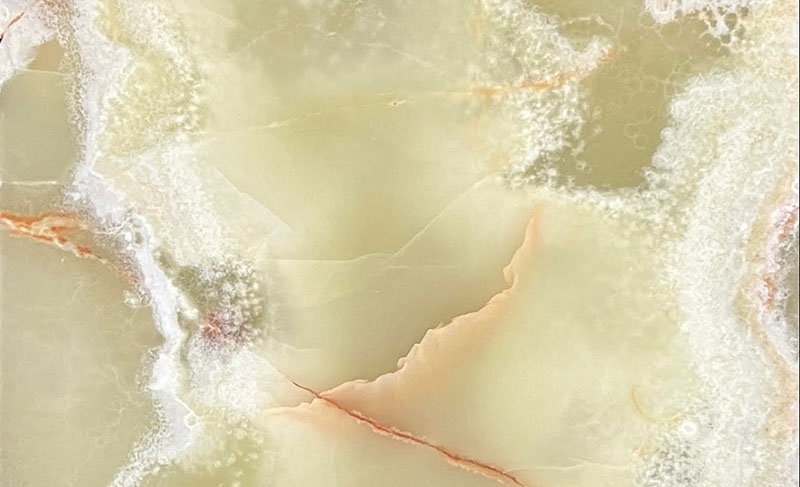
Onyx
Onyx is a sedimentary stone formed from the deposition of microscopic crystals, often within cave environments; the uniformity and fineness of these crystals give onyx its characteristic translucence, allowing light to pass through the surface; naturally delicate, onyx may contain fissures or pits, which are typically reinforced, backed, or filled during processing; despite its fragility, onyx is highly valued for its decorative appeal.
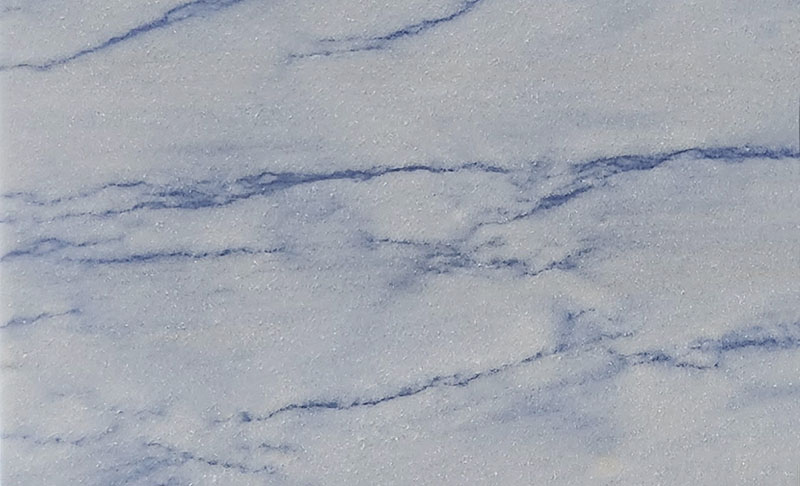
Quartzite
Quartzite is a metamorphic rock formed when quartz-rich sandstone is subjected to intense heat and pressure; it is harder than granite and marble, making it highly durable, heat- and scratch-resistant; quartzite’s natural beauty and strength make it a popular choice for both decorative and functional applications; proper sealing is recommended to prevent staining.
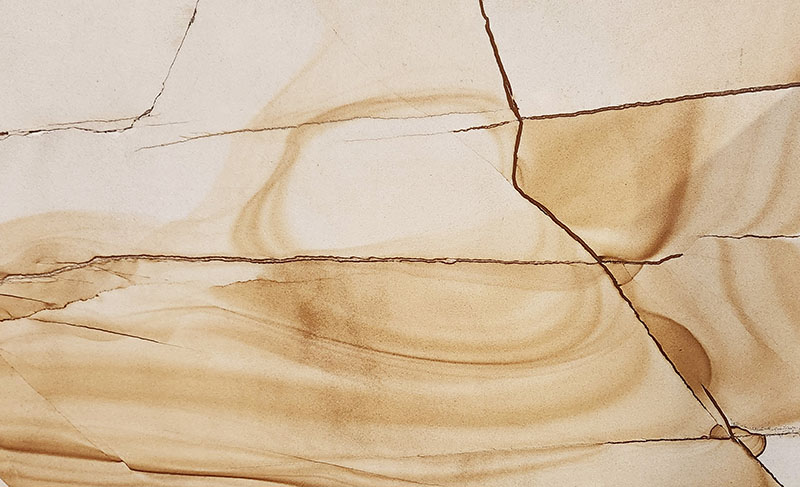
Sandstone
Sandstone is a sedimentary rock composed of layers of quartz grains and mineral cements, sometimes mixed with calcium carbonate or iron oxide; it is typically light brown, tan, or reddish in color, with a striated or layered appearance; sandstone is durable but may require sealing to protect against staining and weathering.

Slate
Slate is a fine-grained metamorphic rock formed from clay, shale, and other sedimentary materials; it naturally splits into thin, flat layers, making it ideal for flooring, roofing, and wall cladding; slate is hard and long-lasting, though its layered structure can make it prone to chipping or splitting if not handled properly.
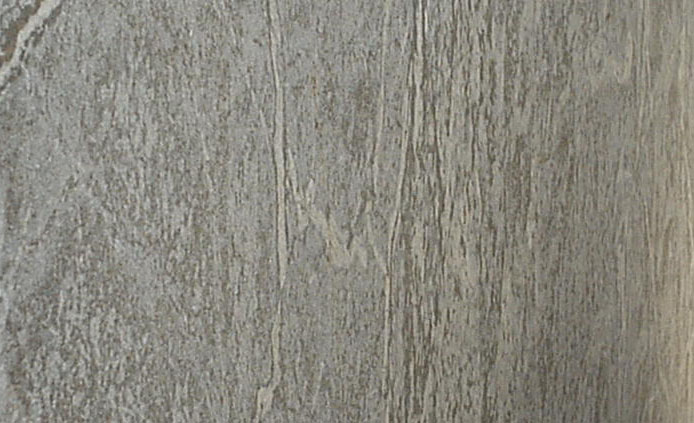
Soapstone
Soapstone is a soft metamorphic rock composed primarily of talc, giving it a smooth, soapy texture; it is dense, resistant to heat and stains, and develops a natural patina over time; although it can scratch, these marks can be lightly sanded or oiled to restore the surface.

Travertine
Travertine is a porous, sedimentary limestone formed from mineral deposits in hot springs or limestone caves; its natural surface features pits and troughs created by trapped gas bubbles during formation; travertine is durable for flooring and decorative applications, and holes are often filled with resin, cement, or grout to improve strength and maintenance.
Summary:
| Material | Type/Formation | Key Characteristics | Common Uses |
|---|---|---|---|
| Basalt | Igneous | Dense, fine-grained, very hard; typically dark in color | Flooring, walls, paving, exterior cladding |
| Limestone | Sedimentary | Composed mainly of calcium carbonate, may contain visible fossils, ranges from fine to coarse-grained, relatively soft | Flooring, walls, architectural features |
| Granite | Igneous | Composed of quartz, feldspar, and mica; crystalline, granular appearance; very hard and durable | Countertops, flooring, exterior cladding, walls |
| Marble | Metamorphic | Formed from limestone under heat and pressure; crystalline structures, prominent veining, wide color range | Decorative and architectural applications, flooring, walls, countertops |
| Mother of Pearl | Natural Material | Iridescent inner layer of mollusk shells; luminous, elegant, requires gentle handling | Inlays, decorative accents, walls, bathroom floors (not shower floors) |
| Obsidian | Igneous | Volcanic glass; smooth, shiny, brittle | Decorative accents, tiles, small architectural features |
| Onyx | Sedimentary | Microscopic crystals give translucence; may contain fissures or pits, delicate | Decorative panels, countertops, backlit features, flooring, walls |
| Quartzite | Metamorphic | Formed from quartz-rich sandstone under heat and pressure; very hard and durable; heat- and scratch-resistant | Countertops, flooring, walls |
| Sandstone | Sedimentary | Layers of quartz and mineral cements; striated appearance; colors range from tan to red | Flooring, paving, exterior walls, landscaping, countertops |
| Slate | Metamorphic | Fine-grained, splits into thin layers; hard but can chip | Flooring, roofing, walls |
| Soapstone | Metamorphic | Composed mainly of talc; soft, smooth texture; heat- and stain-resistant | Countertops, sinks, stoves, decorative items |
| Travertine | Sedimentary | Porous limestone from mineral deposits; pits and holes filled for durability | Flooring, walls, decorative applications |
Stone Features & Characteristcs
Show | Hide
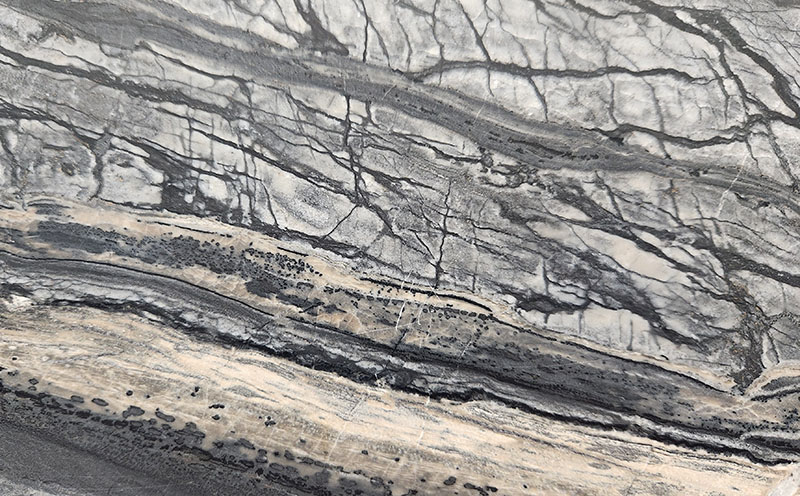
Stone Features & Characteristcs
Show | HideVEINS
In marble, veins and color grains form from liquid minerals that flowed through limestone under heat. As the stone cooled, these minerals solidified, creating natural patterns.
CRYSTALS
Geometric, faceted mineral formations cluster together as the rock solidifies. Crystals determine texture and help identify mineral composition.
SHELL
Some sedimentary stones contain fossilized shells or fragments, compacted over time by pressure. Adds natural texture and historic detail.
COLORS
Stone colors are influenced by elemental composition:
- IRON | Red, Green, Yellow, Black
- CHROMIUM | Red, Green
- COPPER | Blue, Green
- MANGANESE | Pink, Purple, Brown, Black
- TITANIUM | Blue
- COBALT | Blue
1. Midnight Glacier Marble, 2. Blue Macauba Quartzite, 3. Ming Green Marble, 4. Red Sea Onyx, 5. Golden Rustic Travertine, 6. New Gascogne Limestone
Understanding Stone Names
Show | Hide
Understanding Stone Names
Show | HideToday, many companies around the world use general names for different types of stone, confusing the stone maintenance industry; originally, stones were named in Italian, with two parts: the first part described the color, and the second indicated the quarry location.
Examples:
- NERO MARQUINA: Black Marble from Marquina, Spain
- BIANCO CARRARA: White Marble from Carrara, Italy.
Common Color Name Translations
| Azzuro | Blue | Negro / Nero | Black |
| Bianco | White | Perla / Perlato | Pearl |
| Dorato / D’Oro | Gold | Rosa | Pink |
| Fiore | Flower | Rosso | Red |
| Giallo | Yellow | Verde | Green |
Stone Finishes & Textures
Show | Hide
Stone Finishes & Textures
Show | HideHoned
Honed surfaces have a smooth, flat to low-sheen finish with an adjustable gloss level depending on the amount of polishing; they are often porous and used in high-traffic areas, requiring a penetrating sealer; colors may appear muted compared to polished stone.
Polished
Polished stone has a glossy, smooth surface that highlights the stone’s natural colors and patterns; the shine comes from polishing, not coatings, but it can wear down with heavy traffic or improper care.
Tumbled
Tumbled stones have a slightly rough, worn texture created by tumbling small pieces of marble, limestone, or granite across the surface; a color enhancer is often used to highlight its natural tones.
Soft Pillowed
Soft pillowed surfaces have a leathered, matte texture, typically achieved by brushing the stone with abrasive tools to give it a velvety feel.
Soft Touch (Satin)
Soft touch finishes have a silky smooth, matte surface achieved through brushing, lightly polishing, or special coatings; its surface is non-reflective, fingerprint-resistant, and typically considered a balance between honed and polished.
Filled & Unfilled
Not technically a finish but an alteration worth noting; some stones, like travertine, have natural holes and crevices; filled means they are filled with resin or cement for easier cleaning; unfilled leaves the stone in its natural state, which can be left as is or filled during installation.
Brushed
Brushed stones have a soft matte surface; the texture is created by lightly brushing the surface with abrasive tools, resulting in an antiqued, relaxed appearance.
Antiqued
Antiqued finishes are either naturally derived or manufactured to have a weathered look, enhancing a stone’s natural texture.
Flamed
Flamed stone has a rough, porous surface created by intense heat that causes the crystals to pop; it requires proper treatment to protect it.
Sandblasted
Sandblasted stone has a textured, matte finish created by a pressurized mix of sand and water.
Sawn
Sawn stone has a rough, flat surface created by cutting with a gang saw; it typically has visible saw marks and a matte finish.
Brush-Hammered
Brush-hammered stone has a textured surface created by pounding, with adjustable levels of roughness.
Hardness of Stone
Show | Hide
Hardness of Stone
Show | HideMineral Hardness
The Mohs Scale, developed in the 1800s, measures a mineral’s resistance to scratching, ranking minerals from 1 (softest) to 10 (hardest); harder stones are more resistant to abrasion, whereas softer stones are more easily scratched; understanding a stone’s hardness helps predict how it will respond to wear and its suitability for various applications.
Examples:
- QUARTZ, a key component of granite, ranks around 7.
- MARBLE ranks around 3, as it is relatively soft compared to granite or quartzite; its calcium (calcite) composition gives it a smooth, elegant texture and allows it to develop the characteristic veining and crystalline structure that make it highly valued in decorative and architectural applications.
Photo Credit: www.compoundchem.com